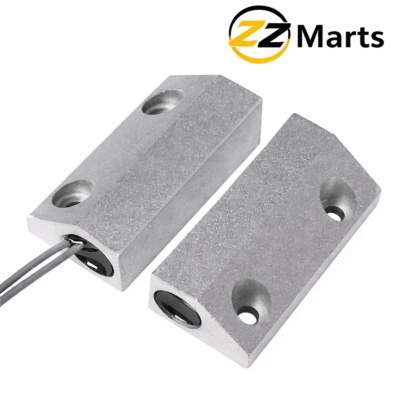
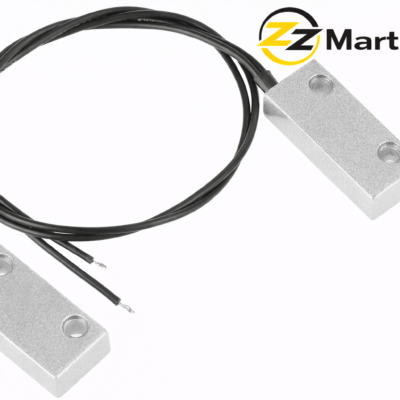
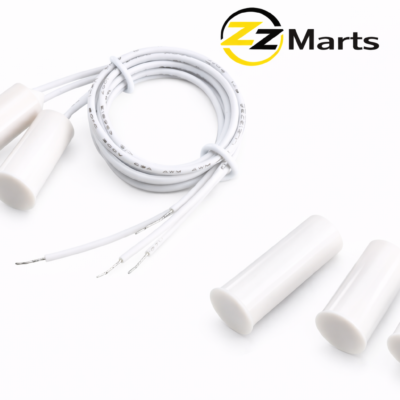
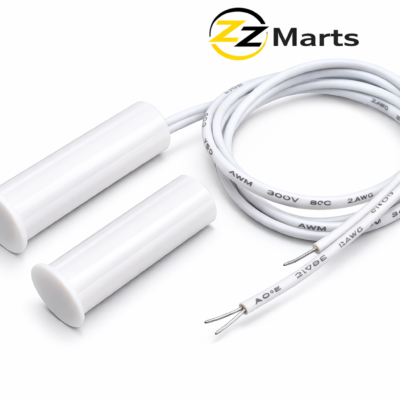
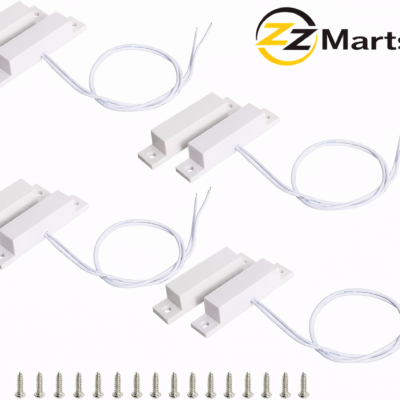
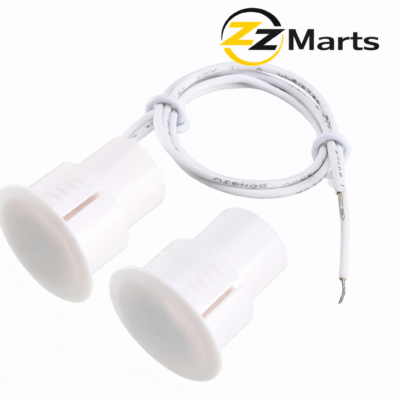
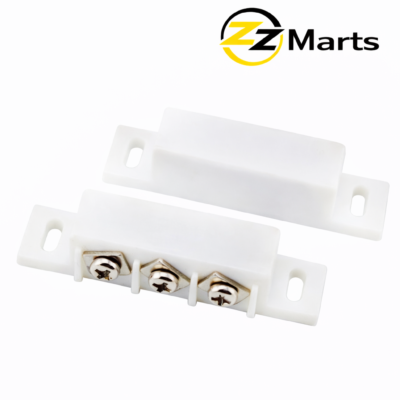
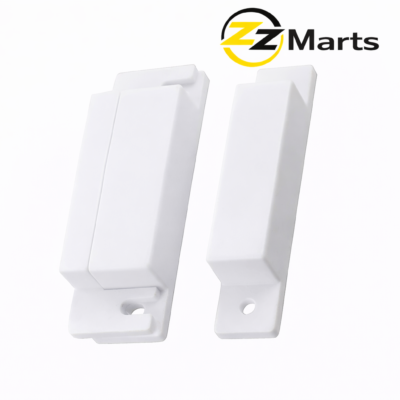
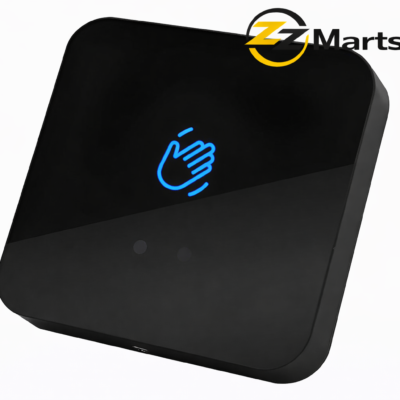
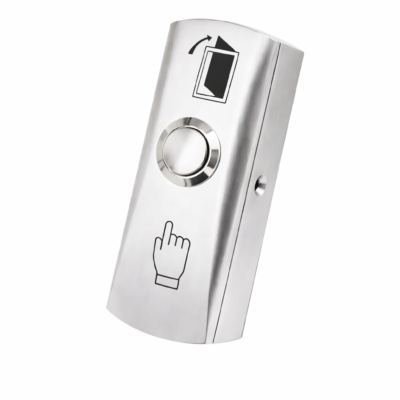
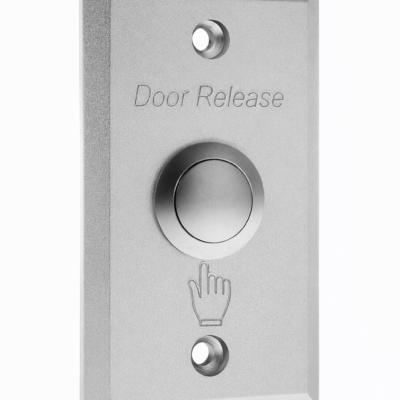
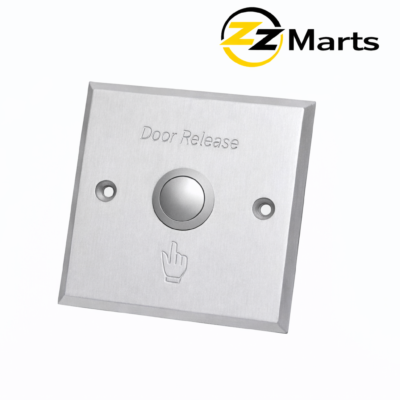
ZZ Marts’ Release Switches category stocks door release relay modules alongside magnetic door contact sensors (surface-mount and recessed NC/NO types) used to detect whether a door is open or closed. These pair naturally — a release switch lets someone out, while a door contact sensor confirms the door has actually closed and locked behind them — making this category a common companion purchase to our Access Control & Electronic Locks range. Our Karachi and Lahore teams can advise on which contact sensor type suits your door frame and existing alarm panel.

What a reed switch door sensor actually is. A door sensor, also called a magnetic contact or reed switch sensor, is a two piece device. One half contains a reed switch and is fixed to the door frame; the other half is a magnet fixed to the door itself. While the door is closed the magnet holds the reed switch in position, and the moment the door opens the magnet moves away and the switch changes state. That change is what tells your alarm panel, access control system, or smart home hub that the door has opened. They are inexpensive, have no moving parts to wear out, and are the most reliable way to know whether a door or window is open.

Wired reed switch door sensors. Wired sensors connect directly to an alarm panel or controller and never need batteries, which makes them the right choice for permanent installations in offices, shops, warehouses, and factories. Because they draw power from the panel, they keep working through load shedding as long as the panel has backup. Surface mounted versions screw onto the frame and are quick to fit; recessed versions are drilled into the door edge and are almost invisible once the door is closed, which suits smart looking entrances and stops anyone tampering with them.

Tuya door sensors and smart home use. A Tuya door sensor connects over WiFi or Zigbee to the Smart Life or Tuya app rather than to an alarm panel, and sends a notification to your phone when a door opens. This suits homes, small shops, and anyone who wants alerts without installing a full alarm system. Typical uses include knowing when children arrive home, being alerted if a shop shutter or store room opens after hours, and triggering lights or other smart devices automatically when a door opens. They run on batteries, so plan on replacing cells periodically, and remember that app notifications need working internet even though the sensor itself does not.

Choosing between wired and smart. If the sensor is part of a security system that must work regardless of internet, choose wired and connect it to your alarm panel. If you want convenience and phone alerts without wiring, choose a Tuya or WiFi sensor. Many businesses use both: wired sensors on the perimeter doors that matter for security, and smart sensors on internal doors where notifications are simply useful.

Understanding NO and NC contacts. Door sensors are supplied as normally open (NO) or normally closed (NC). Alarm systems almost always use NC, because a closed circuit that breaks when the door opens also breaks if someone cuts the cable, so tampering triggers the alarm as well. NO contacts are used in some automation and relay applications. If you are wiring into an alarm panel and are unsure, NC is nearly always what you need, and we are happy to confirm.

Fitting them properly. The two halves must line up, and the gap between them when the door is closed must stay within the sensor’s rated distance, typically a small number of millimetres. Most reported faults are simply alignment drifting as a door settles or swells with humidity. On metal doors and frames, mount the sensor on a small non metallic spacer if readings become unreliable, because metal can affect the magnetic field. Fit the sensor on the hinge side edge rather than the opening edge where practical, so it is less exposed.

Relay modules. Alongside sensors we stock relay modules, which let a low current signal from a sensor or controller switch a higher current device such as a lock, siren, gate motor, or light. If you are trying to make a sensor trigger something that draws real power, a relay module is the correct and safe way to do it.

Buying from ZZ Marts. We stock wired surface and recessed reed switch door sensors, magnetic contacts for shutters and metal doors, Tuya and WiFi smart door sensors, shock and vibration sensors, and the relay modules to go with them. Supplied from our Karachi (Saddar) and Lahore stores with delivery across Pakistan, trading as Zam Zam Traders since 2005. Tell us the door type and what you are connecting to, and we will confirm which sensor and contact type you need before you order.